Staring at a catalogue of cutters and unsure what to buy? End mill selection starts with the material you’re cutting, then the operation. Match flute count, tool material and coating to both, and keep the tool short and rigid.
This guide is one part of the wider cnc design guidelines, which look at how part features and tooling choices fit together.
| Item | Typical value |
|---|---|
| Flutes for aluminum and other non-ferrous materials | 2-3 flutes |
| Flutes for general-purpose milling, particularly steels | 4 flutes |
| Flutes for stainless, titanium, high-efficiency and finishing work | 5+ flutes |
| Plain shank, most common up to | 3/4 inch diameter |
These figures come from a Butler Bros tooling guide and MSC’s end mill buying guide. Suppliers revise their guidance and flute counts are rules of thumb, so check the source before you rely on them.
Start with the workpiece material
Your workpiece material narrows the field faster than any other variable. Aluminum benefits from sharp edges, fewer flutes and efficient chip evacuation, while steel often calls for stronger edges and greater thermal resistance, as Penn Tool Co.’s buying guide explains.
Before you open a catalogue, answer these questions:
- What material am I cutting?
- How hard is it?
- How does it form chips?
- How much heat will the application generate?
The answers matter because a cutter designed for aluminum won’t necessarily perform the same way in stainless steel, titanium or hardened steel. Don’t assume one tool covers every job on the machine.
How many flutes do you need?
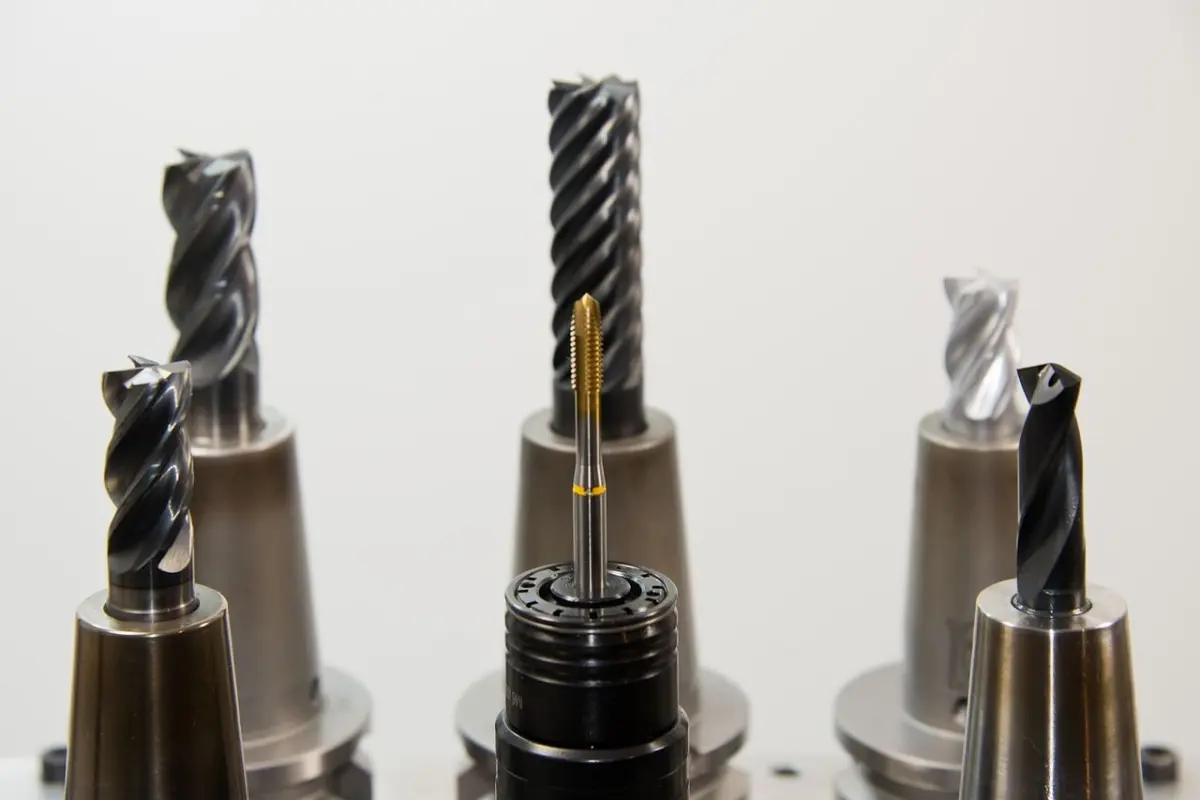
Flute count is a trade between chip space and strength. According to MSC’s guide, more flutes make a stronger tool with a finer finish that works best on harder materials, while fewer flutes give more chip space for softer materials and aggressive cuts.
The Butler Bros guide gives a practical starting point:
- 2-3 flutes: common for aluminum and other non-ferrous materials, because the larger flute valleys give chips more room to evacuate.
- 4 flutes: a versatile option for general-purpose milling, particularly in steels.
- 5+ flutes: often used in steels, stainless steels, titanium, and high-efficiency or finishing work.
More flutes aren’t automatically better. If chips can’t evacuate, chip packing and recutting quickly hurt tool life and surface finish.
Slotting is where this bites hardest, because the cutter is heavily engaged with the workpiece. Penn Tool Co. notes that two-flute designs are often useful where chip clearance is a priority. High-efficiency milling is the exception: its lighter radial engagement lets it use higher flute counts and stronger cores.
Carbide or HSS: which tool material fits your setup?
The choice between carbide and HSS depends on your machine, your production needs and your budget. A carbide cutter offers more hardness, wear resistance and higher-speed capability when the machine and setup can support it, while HSS offers toughness and versatility for general-purpose work.
| Feature | HSS end mills | Carbide end mills |
|---|---|---|
| Hardness | Tougher and more forgiving | Higher hardness and wear resistance |
| Heat resistance | Lower heat resistance than carbide | Maintains hardness at elevated temperatures |
| Rigidity | More tolerant of vibration and deflection | Requires a rigid setup to prevent damage |
| Cost | More economical for many applications | Higher initial cost |
The comparison above follows Penn Tool Co.’s table. For production work the payoff can be large: one supplier’s guide rates solid carbide at 4-5× the tool life of HSS-Co at higher cutting speeds in mild steel slotting. Treat that as a vendor claim and not a promise.
Coatings: match the surface layer to the cut
An end mill coating is an engineered surface layer that improves wear resistance, reduces friction, manages heat and extends tool life under suitable conditions. Common choices are TiN, TiCN, TiAlN and AlTiN, as listed in the Penn Tool Co. guide.
When you pick a coating, weigh these factors:
- Workpiece material
- Cutting speed and feed
- Dry or wet machining
- Heat and abrasiveness
- Desired tool life
- Roughing or finishing
The goal isn’t the most heavily coated tool but the right match. For some jobs an uncoated HSS tool is enough, while demanding CNC work may benefit from coated carbide.
Getting it wrong is costly. The AIMS guide says the usual mistakes are the wrong coating for the work material or the wrong flute count for the depth of cut, and it flags an AlTiN-on-aluminium trap for beginners. When in doubt, Butler Bros suggests starting from the manufacturer’s recommendations, especially for difficult materials.
Match the end profile to the operation
The geometry at the tip should suit the feature you’re cutting. The Butler Bros guide describes the three common end profiles:
- Square: general milling, slotting, profiling and square corners.
- Ball nose: 3D contouring and complex surfaces, often found in molds and dies.
- Corner radius: a stronger cutting edge, because the sharp corner is eliminated; a good choice when the part design allows a radius.
Roughing and finishing want different tools. Roughing end mills, also called hog mills, remove large amounts of material quickly, and their serrated teeth reduce cutting forces but leave a rough finish for a later pass, as MSC describes.
Pocketing adds repeated engagement and disengagement, so rigidity and chip evacuation both matter. Finishing focuses on dimensional accuracy and surface quality, where higher flute counts give more cutting edges.
Keep it short and rigid: diameter, length and shank
Larger-diameter cutters give more structural rigidity for high-volume removal. Smaller ones reach tight pockets and narrow features but are significantly more susceptible to tool deflection, says Penn Tool Co.
Always pick the shortest tool that can safely reach the feature depth. Less overhang reduces chatter and flex and gives a better surface finish. MSC adds that variable helix end mills reduce chatter and vibration.
A rigid cutter also needs a rigid grip on the part, so settle your cnc workholding before you tune cutting parameters. Once the tool is chosen, enter its real flute count, diameter and stick-out in your cam software for cnc so the toolpaths match the cutter.
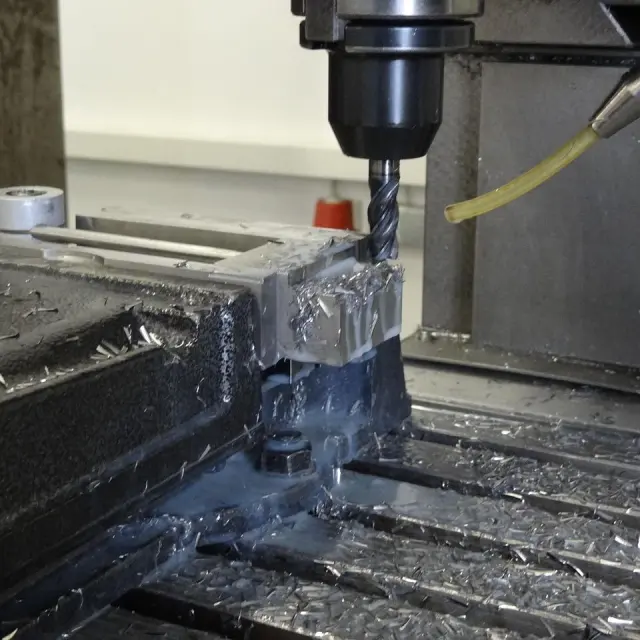
Finally, read the chips. Travers Tool’s technical reference says chips that look too blue mean the tool is running hot and slower feeds may be needed, while chips should come off as little 6’s and 9’s in shape. It also treats every recommendation as a starting point.
Frequently asked questions
Are more flutes always better?
Show answer
Not automatically. According to Butler Bros, 4 flutes are a versatile choice for steels, while 2-3 flutes give chips more room in aluminum. Choose by material and operation, not by the higher number.
Should I buy carbide or HSS?
Show answer
Carbide suits production work and tougher metals when your setup is rigid. HSS is more forgiving and more economical for many general-purpose jobs, according to Penn Tool Co.
Does every end mill need a coating?
Show answer
No. For some applications an uncoated HSS tool is sufficient. Coatings pay off when heat, abrasion or demanding CNC work shortens tool life.
How do I know if my cutter is running well?
Show answer
Examine the chips as they leave the cut. Long chips or a blue colour suggest the feeds and speeds need adjusting, and the Travers reference treats all published figures as starting points only.