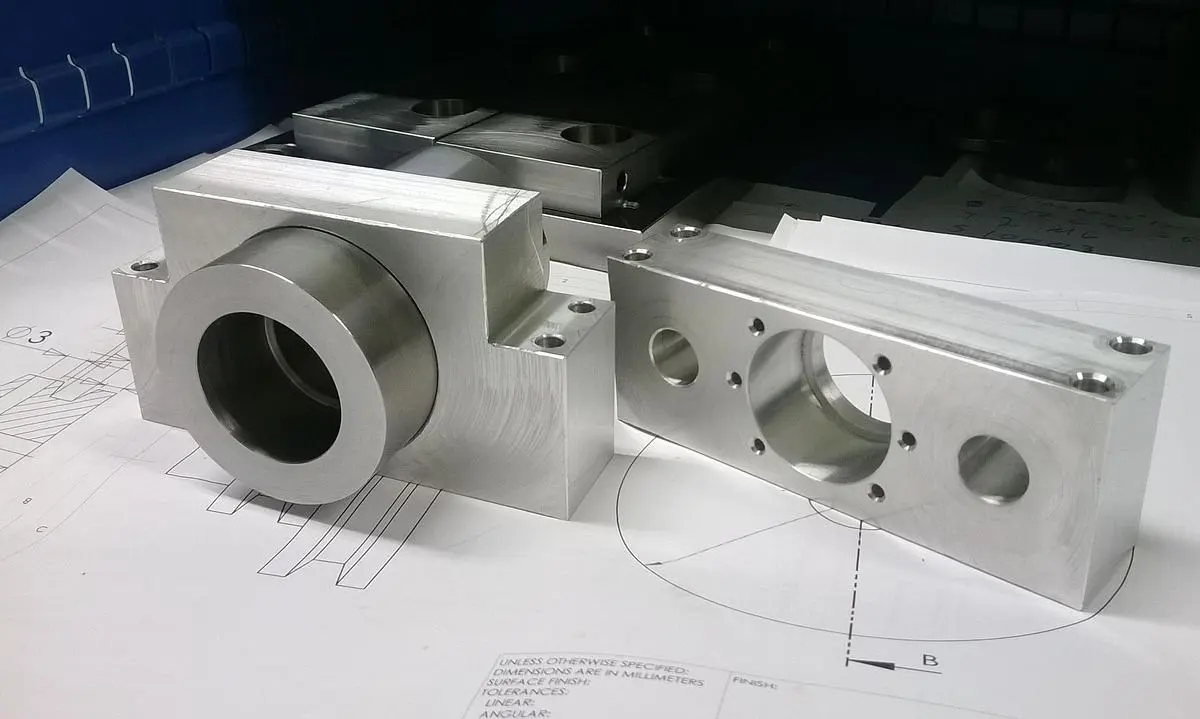
Need a prototype in real metal or plastic, not a model that only looks right? CNC prototyping cuts your part from solid stock, so you test real material and tight tolerances. Design for the machine from the start.
This page sits inside the wider topic of precision cnc machining, which covers the foundations behind the parts described here.
| Item | Value |
|---|---|
| Tightest feature tolerance cited by Protolabs | ±0.001 in. (±0.025 mm) |
| Fastest turnaround listed for machined parts | As fast as 1 day |
| NASA example part, delivery time | 36 hours |
| Axes on some modern mills | Five |
| First computer-based machine control | 1949 |
These figures come from Protolabs, and the design tips further down draw on MakerVerse. The figures can change, so check the source before you rely on them.
How does CNC prototyping work?
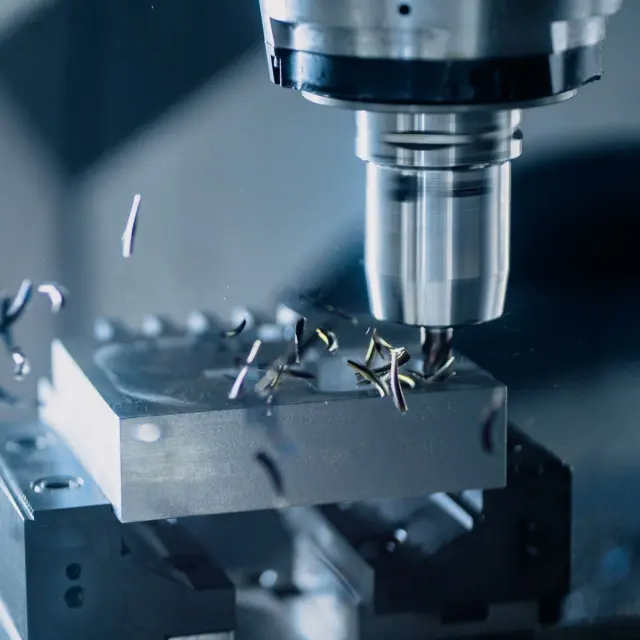
CNC prototyping starts with a solid block or cylinder of metal or plastic and cuts away material until only your geometry remains. Protolabs calls it a high-speed version of sculpture, using drill-like cutters called end mills. The key idea is subtraction: unlike 3D printing, where you add material to form a part, machining removes it.
If you want the full path from CAD file to finished part, the cnc machining process page walks through each stage.
According to Protolabs, modern computer-based control of machines was developed in 1949 by James Parsons at the Massachusetts Institute of Technology, using punched paper tape. On some of today’s mills, machining can take place on five different axes without removing and restaging the part in a fixture. The same source links that to faster, more accurate output.
Why choose machining over 3D printing for a prototype?
Xometry’s design guide says that by subtracting from raw materials, rather than printing in layers, CNC machining lets you build market-testing prototypes and production parts with the material you need and the finish you want, as described in its CNC machining design guide. That matters when a prototype has to behave like the final part.
Here is where machining tends to fit best:
- Real material. You start from a block or bar of the metal or plastic you intend to use, so strength and stiffness tests mean something.
- Tight features. Machining is built around precision, so bores, mating faces and threads can be tested at the tolerances a final part would need.
- A path beyond one-offs. Protolabs frames the same process as suited to prototypes and low-volume production parts, so a design can move on without a change of method.
Machining has limits too. Makerverse notes that parts with thin walls and webs, deep pockets and deep holes can be challenging, because cutting and clamping forces can distort them.
Tolerances and turnaround: what the figures say
A tolerance tells you how far a dimension may drift from its nominal value, and meviy gives the example 50 ±0.1 mm in its guide to CNC design for manufacturability. At the precise end, Protolabs says machining reaches feature tolerances of ±0.001 in. (±0.025mm). Tighter is not automatically better for a prototype, since you only need precision on the features that must fit or seal.
Speed is the other draw. In its prototyping guide, Protolabs lists machined prototypes and production parts in as fast as 1 day, and it describes a NASA part, machined from a crowdsourced, generatively designed model, delivered in only 36 hours. Those are best-case examples from one provider, so confirm your own lead time.
Design tips that keep a prototype easy to machine
MakerVerse publishes 23 design tips for machined parts. A handful matter most for early prototypes:
- Prefer chamfers to fillets where you can. A chamfered edge, typically at a 45-degree angle, is more manufacturable than a rounded filleted edge.
- Write specific drawing notes. Vague comments such as “Polish this surface” or “Tool marks not permitted” are hard for machinists to interpret.
- Dimension from one datum. Measuring from a single datum line, rather than scattered points, simplifies tooling and gauging and avoids overlapping tolerances.
- Keep the part rigid. Design it to withstand clamping and cutting forces without distortion, and avoid thin, long walls, which tend to deform.
- Plan for burrs. Expect them, give them relief space and make them easy to remove.
For turned parts, the same guide recommends a large, solid mounting surface with parallel clamping surfaces and a minimum of 12 mm in height. It also notes that splitting a complex part into simpler pieces often makes it easier to produce.
Materials and finishes for prototype parts
Pick the material for the job the prototype has to do. Makerverse advises avoiding hardened or difficult-to-machine materials unless their properties are essential, and using stock dimensions and geometries when that removes a machining operation.
Finish is the next decision. Meviy explains that surface roughness is usually given as Ra, the arithmetic mean roughness in micrometres, and that it affects how parts fit, slide, seal, wear and look. Our cnc surface finishes page covers the options in more detail, and Protolabs also lists anodizing and plating for machined parts.
A short checklist before you ask for a machined prototype
- Decide what the prototype must prove: fit, strength, appearance or all three.
- Choose a material that matches that purpose, favouring easy-to-machine options where the test allows.
- Apply tight tolerances only to the features that need them.
- Check the model for thin walls, deep pockets and sharp internal features before you send it.
- Expect a design for manufacturability (DFM) review. Protolabs describes performing one on uploaded 3D CAD models, and fixing any issues in the model comes before the quote is approved.
Frequently asked questions
What is CNC prototyping?
Show answer
It is making a test part by machining it from solid metal or plastic, rather than building it up layer by layer. You get the material and finish you intend to use in the final product.
How tight can tolerances be on a machined prototype?
Show answer
Protolabs states that feature tolerances can be as small as ±0.001 in. (±0.025 mm). What a given shop will hold depends on the part, the material and the process, so check with the source or supplier.
How fast can a machined prototype be made?
Show answer
Protolabs lists machined prototypes and production parts in as fast as 1 day, and describes a NASA example delivered in only 36 hours. Real lead times vary with part complexity and finishing.
What should I avoid in a prototype design?
Show answer
Avoid thin, long walls, vague drawing notes and unnecessary hard-to-machine materials. Makerverse also flags deep pockets and deep holes as challenging.