Deciding on cnc milling vs cnc turning for your part comes down to one question: what spins? Turning rotates the workpiece, milling rotates the tool, so round parts suit turning and pocketed, multi-face parts suit milling.
This comparison sits inside our wider guide to precision cnc machining, which puts both processes in context.
| Item | Value |
|---|---|
| Turning: what spins | The workpiece; the tool stays nearly stationary |
| Milling: what spins | The cutting tool; the workpiece is clamped |
| Turning: natural geometry | Axisymmetric: diameters, tapers, threads |
| Milling: natural geometry | Prismatic and freeform: pockets, slots, planar faces, 3D surfaces |
| Turning: typical workholding | Chucks/collets, steady rests, tailstock |
| Milling: typical workholding | Vises, modular fixtures, pallets, tombstones |
The table draws on the published guides from Mastercam and Encycam. Vendor pages get revised, so check the sources before you rely on the details.
How the two processes cut
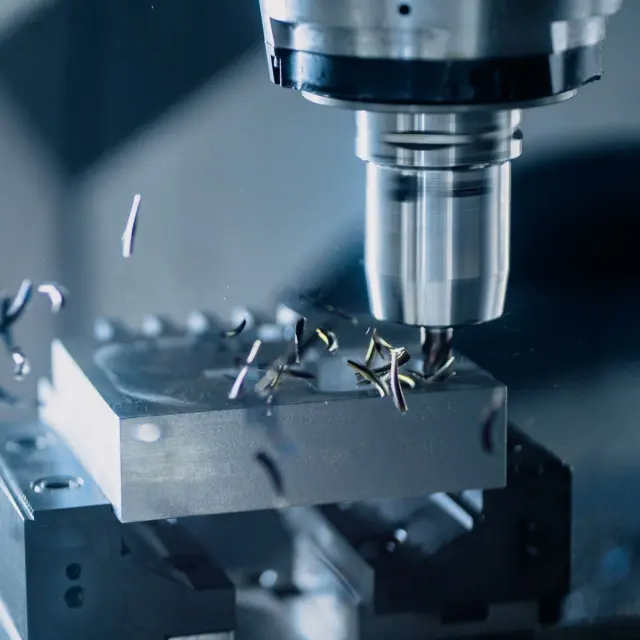
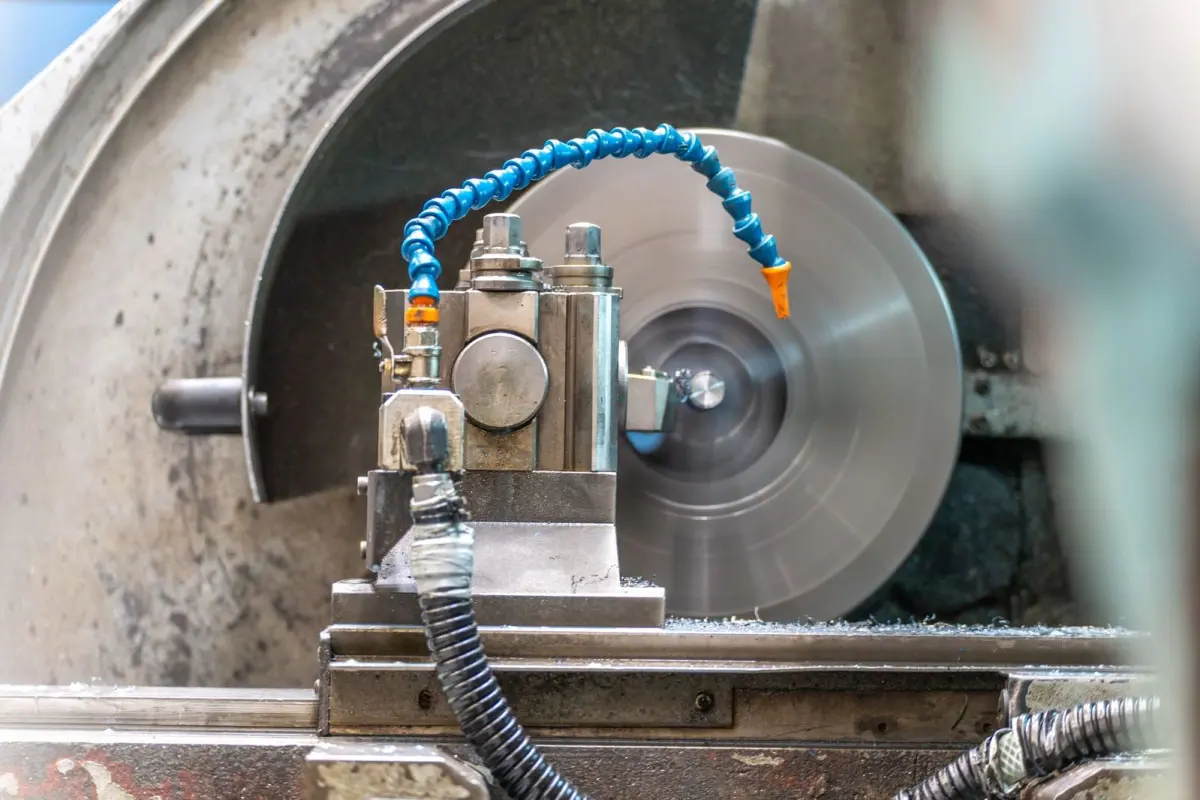
The main difference is which piece spins: the cutting tool or the stock material, as Mastercam explains. Milling advances a fast-rotating tool into the stock and moves it along a CNC-determined path. Turning spins the material on a lathe while a stationary tool advances into it.
Brother Machinery’s guide offers a simple picture: imagine a lathe as a potter’s wheel and a milling machine as carving a sculpture. Both processes are subtractive, and both rely on CNC programming that moves a cutting machine along a predetermined path, according to Encycam.
In practice the tools and setups differ too:
- Turning usually relies on simple single-point cutting tools, according to Wikipedia.
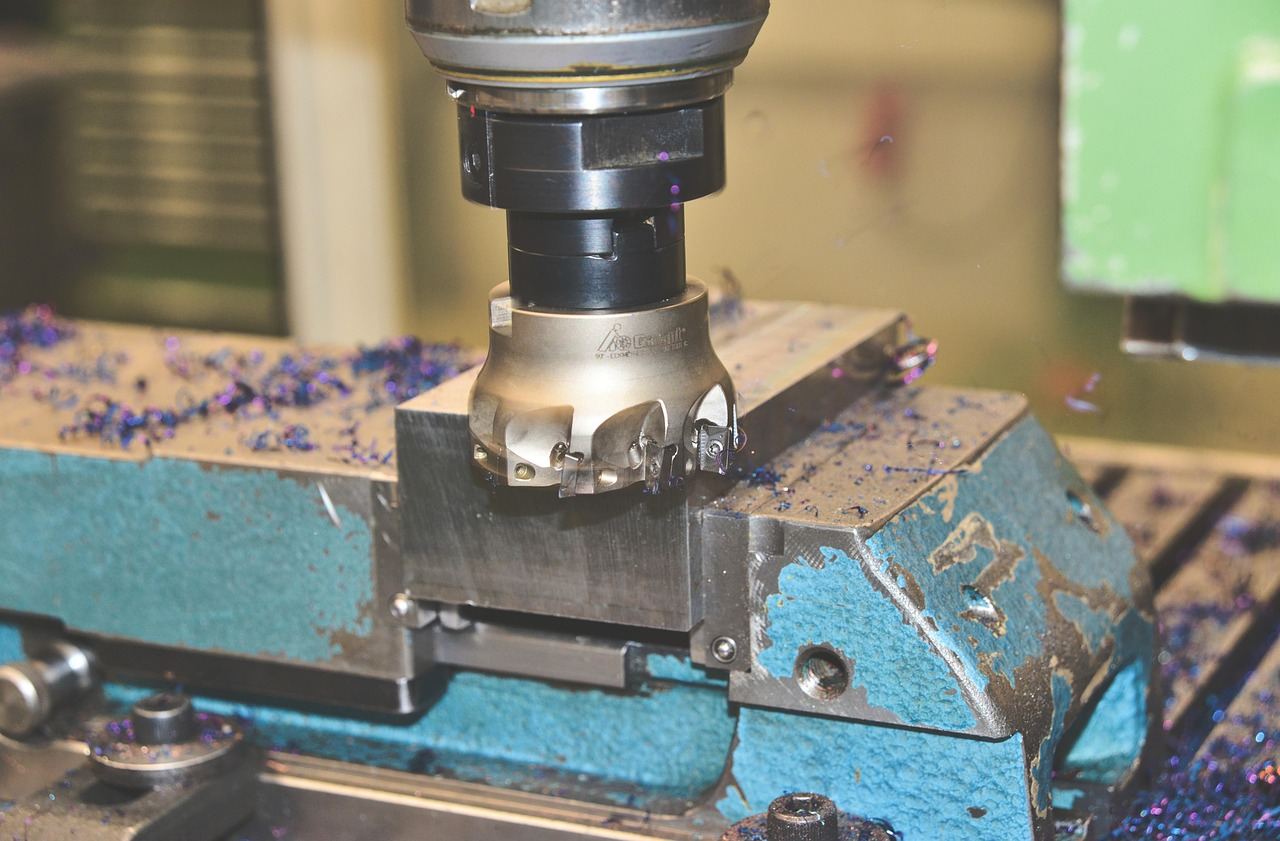
- Milling uses a rotating cutter such as an end mill or face mill while the workpiece is rigidly clamped in a vise or fixture, per Encycam.
- Motion in milling comes from tool rotation plus CNC-controlled linear and rotary axes, while turning feeds the tool along and across the spinning workpiece.
Where turning is the better fit
Turning naturally produces axisymmetric features: outside and inside diameters, shoulders, grooves, tapers, radii and threads. Concentricity is straightforward because all critical features reference the spindle axis, Encycam notes. Mastercam adds that parts like drill bits and pipes are best made by turning because they are mostly radially symmetrical.
Typical lathe operations include the following, according to Wikipedia:
- Straight turning and taper turning
- Profiling
- External grooving
- Single-point threading, using a tool shaped like the thread
Lathes also suit repeat work. Encycam says they handle bar stock efficiently and keep changeovers short when diameters and lengths vary but part families share a profile. Long, slender parts may need steady rests, tailstock support or anti-vibration boring bars to control chatter and runout.
Workholding shapes accuracy as well. Wikipedia notes that chucks are less accurate than collets but can hold a wider range of workpiece sizes.
Size is rarely the barrier. Lathes range from tabletop machines suitable for jewelry to building-sized machines for ship propeller shafts, per Wikipedia, and one manufacturer’s lathe range covers components over 1,000 mm in diameter and more than 6,000 mm long, according to DMG MORI.
For hardened material, hard turning is performed on workpieces with a hardness greater than 45 Rockwell C, according to Wikipedia. It is generally better than grinding for rough stock removal, but grinding generally gives a better surface finish and greater dimensional accuracy.
Where milling is the better fit
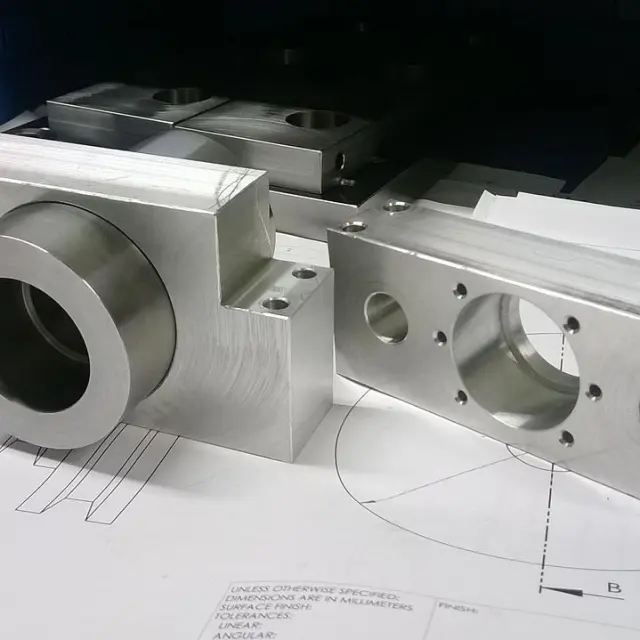
Milling excels at prismatic and freeform shapes: pockets, slots, bosses, planar faces and sculpted 3D surfaces that turning cannot generate, per Encycam. Mastercam says most general, industrial and automotive parts are made by CNC milling.
Multi-axis machines widen access further. Modern 4- and 5-axis mills reduce setups by reorienting the part to keep the tool near-normal to the surface, Encycam reports. Our guide to 5 axis cnc machining goes deeper on that approach.
Milling has limits too. Cutting is restricted by tool accessibility, and longer, thinner tools can extend the operating range but may affect machining tolerances and surface finish, according to Manufacturing Tomorrow.
Because milling is an intermittent cut, tool edges experience cyclic loading and thermal swings. A rigid setup with minimal tool stick-out, solid fixturing and good chip evacuation is a major determinant of accuracy and throughput, per Encycam.
How do you choose between them for a specific part?
Encycam’s selection criteria give a practical order of questions to ask:
- Geometry first. If the part is primarily round with critical diameters or threads, start with turning. If it is primarily prismatic or has complex pockets and faces, start with milling.
- Tolerance and finish. If GD&T calls out tight roundness, cylindricity, concentricity or thread form, favor turning and boring. Round holes made by interpolation on a mill often need reaming or boring for top form.
- Automation. Turning is supported by bar feeders, parts catchers and sub-spindles. Milling is supported by pallet pools, tombstones and probing for multi-face families.
Your stock material is a separate decision, and our guide to cnc machining materials covers it. Nothing stops you from using both processes in sequence, since Manufacturing Tomorrow notes some applications require two operations.
Mill-turn: when one machine does both
Multi-tasking lathes add driven tooling, C-axis spindle positioning and a Y-axis. That lets you mill flats, keyways and simple prismatic details without leaving the machine, according to Encycam. Mastercam adds that turn mill programming lets machines handle both operations in a single setup.
Naming depends on the base machine. A mill with turning capability is usually called mill-turn, while a lathe with live tooling and Y/B axes is typically called turn-mill, per Encycam.
At the top end, DMG MORI describes turn and mill machines that combine the 6-sided complete machining of lathes with the 5-axis machining of milling machines. It says finishing in one work area benefits component quality because manual reclamping is a thing of the past, per its blog.
Even so, Encycam cautions that you get the best economics on a turning-based machine when the core geometry remains round.
Frequently asked questions
Is milling the same as turning?
Show answer
No. Encycam says teams sometimes treat them as interchangeable, but they are not: turning rotates the workpiece against a stationary tool, while milling rotates the tool against a clamped workpiece.
Which process is better for round parts?
Show answer
Turning. DMG MORI describes it as by far the most efficient technology for machining rotationally symmetrical components, and Mastercam names drill bits and pipes as typical turned parts.
Can a lathe do milling work?
Show answer
Yes, within limits. Multi-tasking lathes with driven tooling, a C-axis and a Y-axis can mill flats, keyways and simple prismatic details, though the process stays turning-centric.
Can a mill make round features?
Show answer
It can, but Encycam notes that round holes made by interpolation often need reaming or boring for top form. If tight roundness is critical, turning and boring are usually the better route.