Wondering whether 5 axis cnc machining is worth it for your part? It helps most when a part has complex angles or contoured surfaces and you want to cut it in one setup. Simpler parts may not need it.
This page sits within the wider topic of precision cnc machining, which covers the rest of the field.
| Item | Value |
|---|---|
| Linear axes | 3 axes (X, Y, Z) |
| Rotational axes | 2 axes |
| Faces machined in one operation | Up to 5 faces |
| Common configurations | 3+2-axis and simultaneous 5-axis |
These figures come from RapidDirect’s comparison of 3+2 and 5-axis machining and Fictiv’s guide to 5-axis machining. They can change, so check the sources before you rely on them.
How five-axis machining works
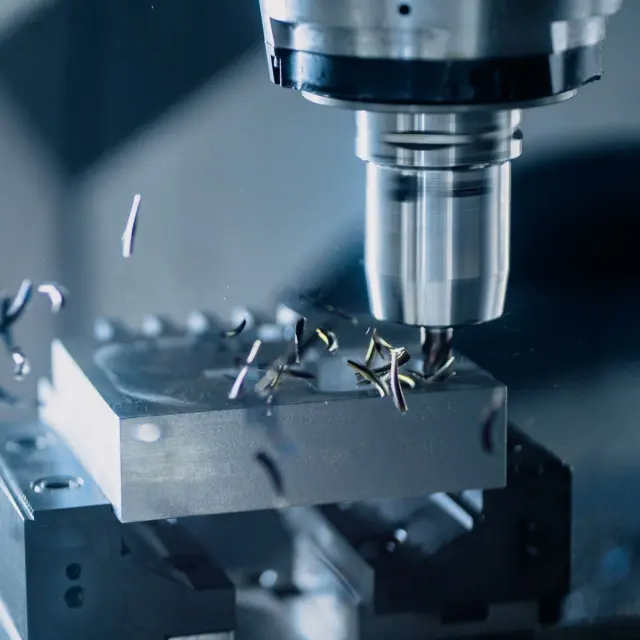
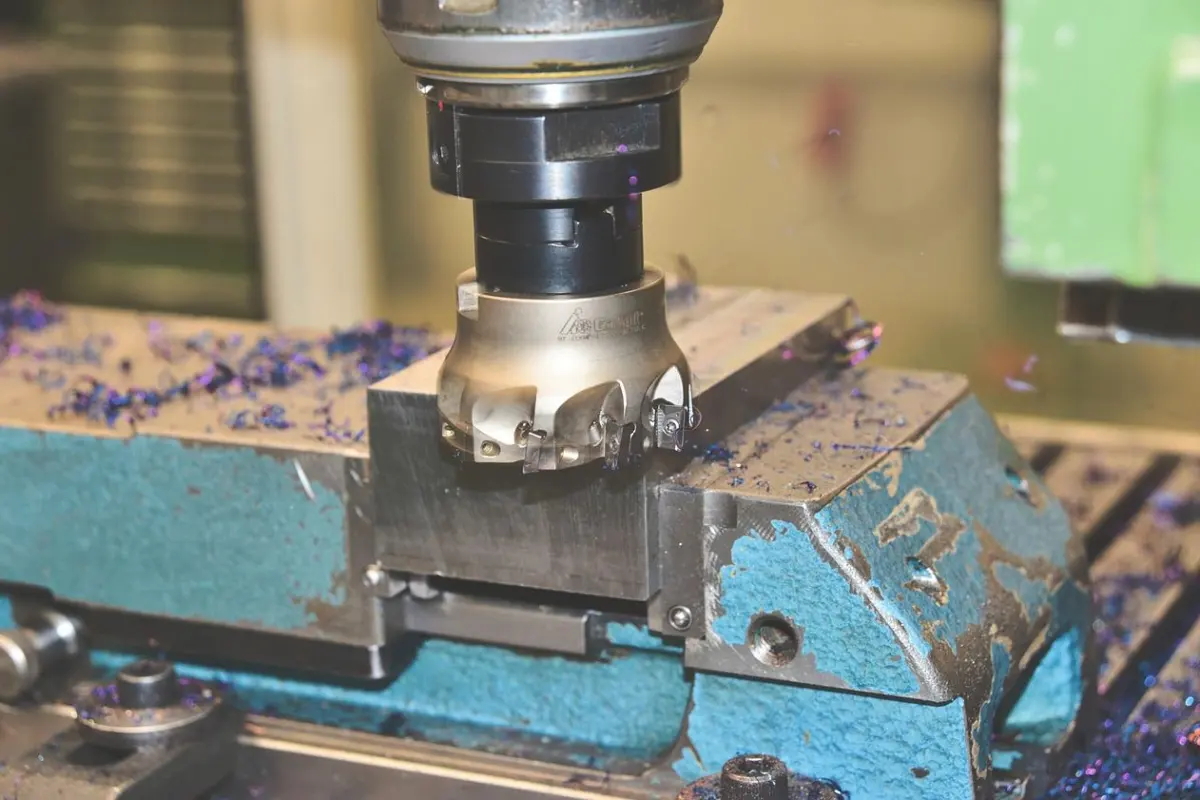
5-axis machining is a subtractive process: a cutting tool removes material from a workpiece. The machine moves the tool, the part, or both, with three linear movements (left-right, front-back, up-down) plus two rotational movements that let the tool or part tilt and turn, as Fictiv explains.
On a 3-axis machine, operators must stop the process, manually reposition the workpiece, and start again. Each repositioning can add error and consume time. The two extra axes are there to avoid that.
The rotational axes are named by the axis they turn around:
- A-axis: rotation around the X-axis, tilting forward and backward.
- B-axis: rotation around the Y-axis, tilting side to side.
- C-axis: rotation around the Z-axis, spinning like a turntable.
A 5-axis machine uses only two of these three, depending on its configuration, according to MfgRobots. The result is that machinists can fabricate up to 5 faces in one operation. Parts can be made from metals, plastics and composites, per Fictiv.
For the full sequence from design to finished part, the cnc machining process guide puts this step in context.
3+2 positional versus simultaneous 5-axis
Two configurations get confused. In 3+2 machining, the two rotational axes lock into a fixed position and the machine then performs standard 3-axis machining, according to MfgRobots. It is also called positional 5-axis machining, and RapidDirect notes it uses shorter, more rigid cutting tools.
In simultaneous 5-axis machining, all five axes move continuously throughout the cut, and the tool follows curves while its orientation keeps changing.
| Feature | 3+2 (positional) | Simultaneous 5-axis |
|---|---|---|
| Motion | Rotational axes lock, then a 3-axis cut | All five axes move continuously |
| Tool orientation | Fixed during each operation | Changes dynamically during the cut |
| Programming complexity | Moderate | Advanced |
| Surface finish | Good | Superior |
That comparison is from MfgRobots. Simultaneous work also relies on RTCP (rotational tool center point), a control feature that keeps the tool tip at the programmed point as the rotary axes move.
Machine layouts: where the rotation comes from
Not every 5-axis machine is built the same way. The layout decides what the machine does well, according to MfgRobots:
- Trunnion (table/table): the table provides both rotational movements. It gives superior access to deep cavities and undercuts and suits smaller, complex parts.
- Swivel-head (head/head): the rotational axes are built into the spindle head, so the table never moves. It can handle extremely large and heavy workpieces.
- Hybrid (head/table): one rotational axis sits in the spindle and another in the table, balancing flexibility, speed and rigidity.
When you request a part, the layout of the shop’s machine can shape which of your features are reachable and how big a workpiece it can hold.
When does five-axis machining help?
It earns its place where a part needs access from many directions. MfgRobots lists turbine blades, impellers and medical implants as complex parts that require machining from multiple angles.
Look for these signs in your design:
- Features on multiple faces, such as angled holes, compound angles and prismatic parts with complex orientations, which suit 3+2 work.
- Contoured or freeform surfaces, where simultaneous motion gives a superior surface finish.
- Deep cavities or undercuts that a fixed 3-axis tool cannot reach.
- Parts that would otherwise need several repositionings, each one a chance for error.
When a simpler approach is enough
Full simultaneous motion is not always the right answer. RapidDirect says 3+2 machining works mainly for plane processing projects, while 5-axis suits complex contour surfaces, and sometimes 3+2 may be more efficient.
There is also a programming cost: simultaneous machining requires advanced CAM programming, per MfgRobots.
A quick way to decide:
- List the faces that carry features. If they are flat but angled, 3+2 may cover them.
- Check for curved, freeform surfaces. If they are present, simultaneous motion is worth a closer look.
- Ask whether the part is better made on a lathe or a mill at all; the guide on cnc milling vs cnc turning helps with that choice.
Frequently asked questions
What does 5-axis CNC machining mean?
Show answer
It moves a cutting tool and/or workpiece along three linear and two rotational axes, so complex angles and shapes can be cut in a single setup, according to Fictiv.
Is 3+2 machining the same as simultaneous 5-axis?
Show answer
No. In 3+2 the rotational axes lock before each cut, while in simultaneous machining all five axes move throughout the cut. MfgRobots describes both.
Which materials can be machined this way?
Show answer
Fictiv names metals, plastics and composites as materials parts can be shaped from, in its guide.
Does five-axis machining remove every extra setup?
Show answer
Not necessarily. RapidDirect says the extra axes let machinists fabricate up to 5 faces in one operation, so some parts may still need more than one.