Wondering whether hybrid manufacturing additive and subtractive beats running two separate machines? You get printing and machining in one setup, which suits repairs, coatings and internal channels best, but not most everyday parts.
For the wider picture of how printing fits into production, read our guide to 3d printing for manufacturing.
| Item | Value |
|---|---|
| Processing time cut on DMG Mori USA drawbars (hybrid vs traditional method) | 80% |
| Typical deposited layer thickness (laser DED) | about 1 mm |
| Thinner coating layer for rotary items | about 0.1 mm |
| Standard welding wire sizes (ADDiTEC machines) | 0.8 mm to 1.6 mm |
| Build rate gain, LASERTEC 65 DED hybrid 2 vs previous generation (maker’s claim) | 35% |
| Axis positioning accuracy, same machine (as listed) | 4 microns |
The figures come from Cutting Tool Engineering and 3D Printing Industry. They can change, so check the sources before you rely on them.
How hybrid manufacturing works
A hybrid machine puts a deposition head and cutting tools into one machine. The part is built up and machined without leaving the setup.
In the metal version, laser-based directed energy deposition (DED) lays down molten material layer by layer, and milling or turning then brings the result to size. Mazak’s INTEGREX i-400AM, described in a Digital Engineering article from May 2015, melts metal powder using fiber laser heat.
Hybrid is not only a metal story. According to a 3D Printing Industry report, Hybrid Manufacturing Technologies Global’s AMBIT XTRUDE system, shown during Trident Warrior 2025, added pellet-fed polymer extrusion to a Navy-owned CNC machine before switching back to milling for finishing.
Where hybrid machines pay off
Repair is a major application, according to a Cutting Tool Engineering article. Other significant uses are internal cooling channels, cladding and depositing coatings.
A worn die shows the pattern. The same source describes the repair in three steps:
- Machine off a thin layer of the worn material.
- Clad the surface by 3D printing, using the same material or an advanced one.
- Finish machine the die back to its original shape.
The part never has to move to another machine to be repositioned and fixtured. DMG Mori USA reduced processing time by 80% when it switched machine drawbars to a hybrid approach, as Cutting Tool Engineering reported in November 2024. The core is still made the usual way, and the hard facing material is added in the same machine.
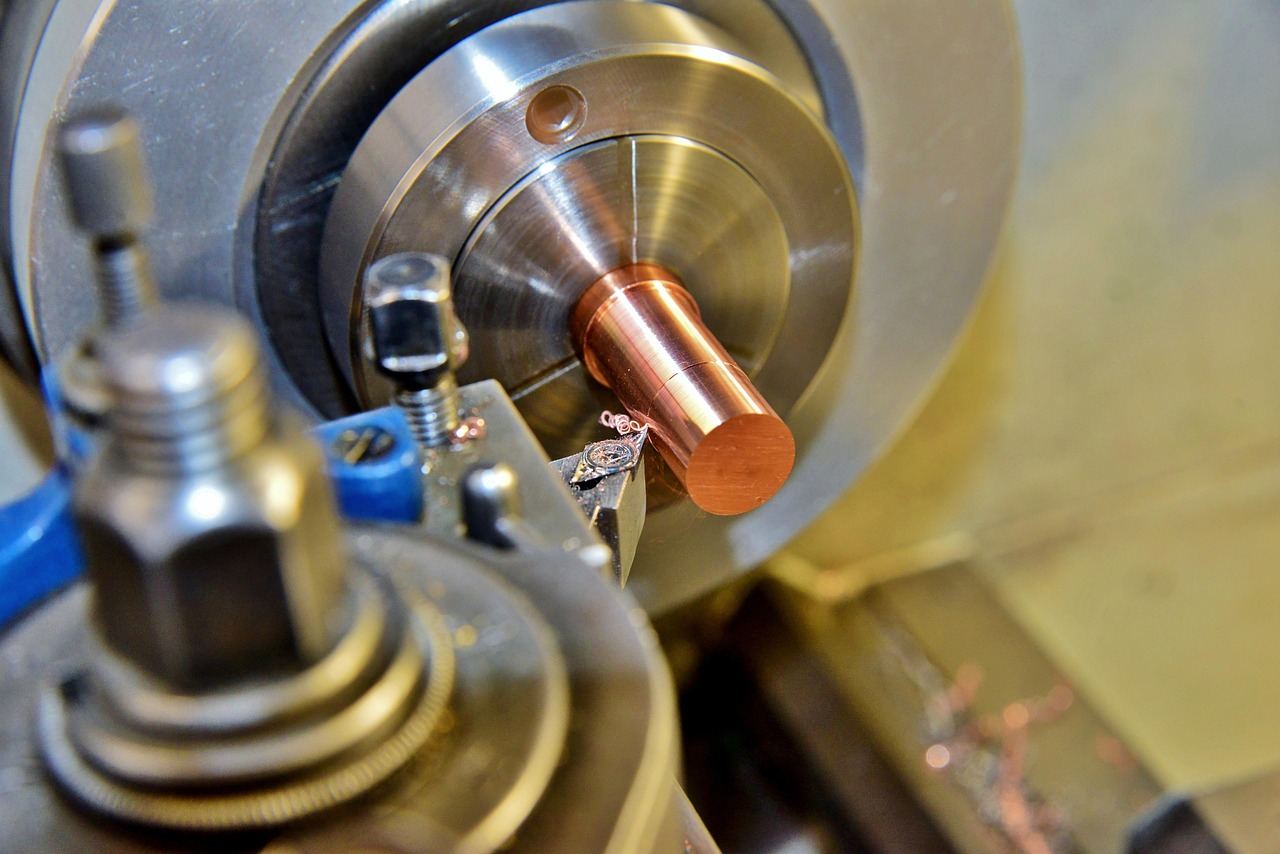
Other examples from that article are a turbine blade with a broken tip and a curved internal cooling pipe. The blade surface is machined, printed and finish machined to specification. The pipe may need a few printed layers, then internal machining, then more printing and more machining until it is complete.
What the printing side can do: layers, wire and powder
Deposited layers are typically about 1 mm thick, and the thickness is adjustable with parameter settings, per Cutting Tool Engineering. For coating rotary items, an additive technology can reduce that to about 0.1 mm.
Feedstock is the next choice. ADDiTEC machines use off-the-shelf welding wire rather than powder, and the standard wire sizes run from 0.8 mm to 1.6 mm, with larger wire giving a higher deposition rate, according to the same article.
The trade-offs the source describes:
- Laser DED enables a high deposition rate, while liquid metal jetting (LMJ) gives a high level of resolution for complex features.
- Wire avoids the personal protective equipment, including a respirator mask, needed to handle powder. ADDiTEC’s R&D program manager put it bluntly: “The powder is toxic.”
- Powder quality matters for successful printing, so DMG Mori offers laboratory testing of particle size distribution, flowability and humidity.
Combining more than one metal in a part
A standard DED hybrid machine from DMG Mori comes with two hoppers for powder, per the November 2024 Cutting Tool Engineering article. That lets mold and die makers produce a part with a copper core that is finished with steel, for a long-lasting mold with good heat transfer.
The change between metals can also be gradual. One example starts at 100% deposition of one powder, then slowly reduces it to 75% while the second material makes up the remainder.
A blue laser option extends this further. As of 3D Printing Industry’s May 2026 report, it is intended for reflective metals such as copper and for graded transitions. The maker also describes selective application of hard materials above 60 HRC, intended to extend service life without additional heat treatment.
A recent machine example
In that May 2026 report, DMG MORI UK introduced the LASERTEC 65 DED hybrid 2. It combines DED with 5-axis machining and measurement in a single setup, and it integrates milling, drilling, turning, grinding, pre-heating and 3D scanning, per the 3D Printing Industry article.
The maker says the build rate is up 35% on the previous generation, with a build volume 170% larger. The working area accommodates parts up to 840 mm in diameter by 350 mm tall, and axis positioning accuracy is listed at 4 microns. Treat these as manufacturer claims, not independent test results.
The range is broader than one machine. As of the November 2024 Cutting Tool Engineering article, DMG Mori offered four hybrid 5-axis CNC machines with laser-based DED through a powder nozzle, two milling machines and two turning centers.
When a hybrid machine is the wrong tool
The technology is not intended to produce most parts. It can save a significant amount of time and money only when the application is appropriate, as the Cutting Tool Engineering article puts it.
Before you consider one, ask:
- Is the job a repair, a cladding or coating task, or an internal channel?
- Does the part need more than one material, or a gradual change between two?
- Will deposited material need machining to final tolerance anyway?
The last question matters because printed metal is rarely finished as deposited. ADDiTEC’s R&D program manager says you always require a post-process finishing operation to get an additive part into functional shape. Our guide to post processing 3d printed parts covers the wider set of finishing steps.
If your parts are polymer and you are still choosing a process, the comparison of fdm vs sla vs sls is a sensible place to start.
Frequently asked questions
What is hybrid manufacturing additive and subtractive?
Show answer
It is a single machine that combines 3D printing, such as laser DED, with machining such as milling or turning. Material is added and removed without moving the part between machines.
Can a hybrid machine print with two metals?
Show answer
Yes. A standard DED hybrid machine from DMG Mori has two hoppers, and the Cutting Tool Engineering article says a special machine can be ordered with more than two. Gradual transitions between the two powders are also possible.
Is powder or wire better for the printing side?
Show answer
Neither wins everywhere. Wire avoids handling powder and its protective equipment, while powder machines need attention to particle size, flowability and humidity.
Does a hybrid part still need finishing?
Show answer
Yes. The source says an additive part always requires a post-process finishing operation, and hybrid machines do that machining in the same setup.